
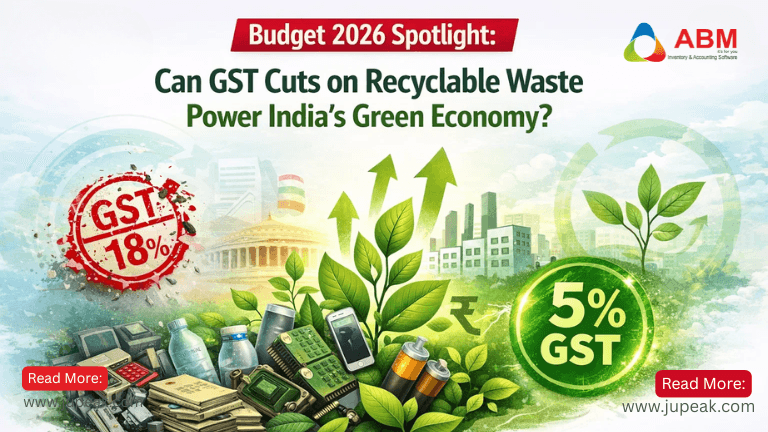

As preparations for the Union Budget 2026, Environmental and Policy Experts are calling for a crucial reform!
Reducing GST on recyclable waste.
The move is being seen as a key step in accelerating India’s transition towards a green, circular, and resource-efficient economy.
Currently, India’s GST framework Taxes recycled materials at the same rate as unused raw materials.
According to environmental experts, this structure unintentionally penalises recycling industries, despite their vital role in reducing Environmental Damage, lowering Import Dependence, and supporting Sustainable Manufacturing.
Why the Existing GST Structure Is a Problem
Experts argue that high GST rates on recyclable waste have created a dual challenge.
First, they discourage formal recycling, pushing large volumes of transactions into the informal sector.
Second, they weaken Domestic Recycling Capacity, making India more dependent on imported raw materials and undermining long-term resource security.
Studies suggest that lowering GST on recyclable waste to 5% or even zero.
While integrating informal Supply Chains into the formal economy could transform the sector.
Estimates indicate that such reforms could potentially generate Economic Gains exceeding ₹90,000 crore, while also strengthening Compliance and Transparency.
Impact Across Industries
The ecycling Ecosystemspans multiple sectors, including Metal Scrap, Plastic Waste, E-waste, Batteries, Paper, Glass, Tyres, and end-of-life Vehicles.
Across all these segments, the potential for reuse and value recovery remains significantly underutilised due to Unfavourable Tax Treatment.
The issue extends to Industrial applications as well.
Materials such as Fly Ash, Slag, Steel Scrap, and Municipal Waste are widely used in Cement and Steel manufacturing to lower Carbon Emissions.
However, recycled and low-carbon materials often attract 18% GST, offering no pricing advantage over more Carbon-Intensive alternatives.
A Chance to Align Tax Policy with Climate Goals
Experts believe that Budget 2026 presents an opportunity to formally recognise “Waste as a Resource.”
Rationalising GST on recyclable materials could boost MSMEs, improve livelihoods for Millions of informal Workers, Reduce Emissions, and make Sustainable Products more Competitive.
As India balances Economic Growth with climate commitments, GST reform on recyclable waste could become a powerful enabler of Green Growth, benefiting Businesses, Workers, and the Environment alike.
Stay Connected with Us for the latest GST Reforms, Budget Insights, and Compliance Updates.
To simplify GST billing and compliance, try ABM Billing Software.
Follow us on Social Media Handles: Instagram Facebook Linkedln
Budget 2026 Spotlight: Why cutting GST on Recyclable Waste could Power India’s Green Economy